
Offshore Gambling – UK Market Analysis
Casinos Not on GamStop in the UK: How the Offshore Market Actually Works
A primary-sourced breakdown of the jurisdictional gap that creates this niche – and what UK players give up when they step outside it.
 Available in GB
Table of Contents
- The short version before the detail
- What “not on GamStop” really means
- How the UK Gambling Commission regulates the market
- Best casino sites in the UK
- How GamStop works and where it stops
- The legal split between players and operators
- Why winnings stay tax-free for players
- How the operator landscape is structured
- Payments, bonuses and no-verification sign-up
- What players lose outside UKGC protection
- The legitimate route back for self-excluded players
- If gambling is causing you harm
- About the author
- Questions readers ask most
The short version before the detail
- “Casino not on GamStop” simply means a site outside the UK self-exclusion scheme, because GamStop only reaches operators licensed by the UK Gambling Commission.
- By the end of 2025 around 562,000 people were registered with GamStop, with 58,675 new registrations in the second half of the year – a measure of how large the self-excluded population now is.
- For players, betting with an offshore operator is not a criminal act under UK law; for operators, serving British consumers without a UKGC licence is an offence under section 33 of the Gambling Act 2005.
- Stepping offshore removes every UK protection at once: no fund segregation, no UK fair-terms rule, no UK dispute resolution and no GamStop reach.
- This page sets out the regulation, the mechanism, the legal position and the risks – then points to a legitimate route back for anyone who self-excluded.
What “not on GamStop” really means
A casino “not on GamStop” is not a special category of gambling site. It is simply an online operator that is not connected to GamStop, the UK national online self-exclusion scheme run by The National Online Self-Exclusion Scheme Limited (NOSES). The scheme launched in April 2018 and became a mandatory licence condition for UK Gambling Commission operators in 2020. Once a person registers, every UKGC-licensed site must refuse them an account for the period they chose.
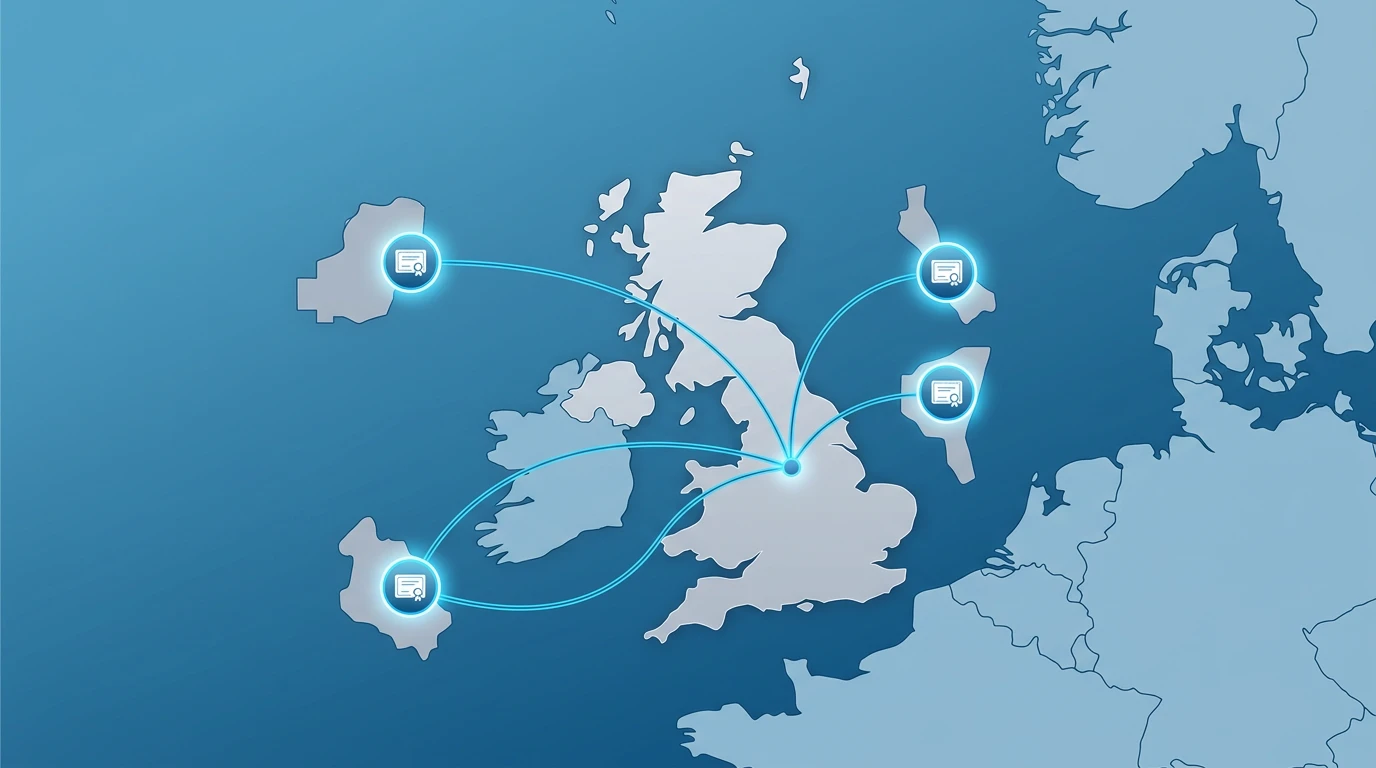
The whole niche rests on one structural fact. GamStop queries only operators that hold a UK licence, in real time, when an account is opened. An operator licensed entirely offshore is never obliged to run that query, so a self-excluded person is invisible to it. That jurisdictional gap, not any clever workaround, is what the phrase “not on GamStop” describes.
That distinction matters because much of the search results around this term is served by ranked affiliate lists that frame these sites as a product to be chosen. This guide takes the opposite line: it explains the UKGC licensing regime and the mechanism honestly, then leaves the judgement to you.

Key takeaway
“Not on GamStop” is a description of where a site sits in relation to UK licensing, not a sign of quality, safety or endorsement.
How the UK Gambling Commission regulates the market
The Gambling Commission is an independent non-departmental public body created under the Gambling Act 2005. It enforces three licensing objectives: preventing gambling from being a source of crime or disorder, ensuring gambling is conducted fairly and openly, and protecting children and vulnerable people. Any business providing facilities for gambling to British consumers must hold an operating licence; operating without one is an offence under section 33 of the Act, as confirmed in the statute on legislation.gov.uk and the Commission’s own guidance.
The 2014 Gambling (Licensing and Advertising) Act moved the regime to a point-of-consumption basis. From 1 November 2014, an operator serving British residents needs a UKGC licence regardless of where it is based. The narrow technical exception – that a remote operating licence is required only where remote gambling equipment sits in Great Britain – is precisely the seam that purely offshore sites use to stay outside UKGC oversight.
A wave of reforms is now reshaping the regulated market and, indirectly, driving demand offshore. Remote Gaming Duty rises from 21 percent to 40 percent from 1 April 2026. Statutory slot stake caps of GBP 5 per spin for players aged 25 and over, and GBP 2 for those aged 18 to 24, are in force. A ban on mixed-product bonuses and a cap on wagering requirements take effect from 19 January 2026, and a statutory levy is set to raise around GBP 100 million for research, prevention and treatment.
For the full mechanism, see the page on how the UK Gambling Commission regulates online casinos, and for the duties that fund all of this, Remote Gaming Duty and player tax.
Best casino sites in the UK
- BeOnBetBonus: 100% up to €500 + 100 FS · Payout speed: 1-3 business days
- JetsetspinsBonus: 200% Bonus + 100 Free Spins + Free Royal Wheel · Payout speed: 1-3 business days
- EvoSpinBonus: 125% up to €2500 + 125 Free Spins · Payout speed: 1-3 business days
- SlotoSportBonus: 500% up to £ 10 200+ 777 FS · Payout speed: 1-3 business days
- AmunbetBonus: Join now and get 450% up to 2,700 GBP + 450 FS · Payout speed: 1-3 business days
- x3betBonus: Welcome Pack 100% Up to £1.000 + 200 Free Spins · Payout speed: 1-3 business days
- SpinFormulaBonus: 550% Up To £15,000 + 550 FS · Payout speed: 1-3 business days
- NightWinBonus: £900 + 400 free spins · Payout speed: 1-3 business days
How GamStop works and where it stops
GamStop maintains a centralised database that UKGC-licensed operators must query in real time. When someone opens or signs into an account, the operator matches their name, date of birth, email and address against the register. On a match, the operator must refuse access for the chosen period. A registrant can pick 6 months, 1 year or 5 years, and from late 2024 a “5 years with auto-renewal” option designed to function as an effective lifetime block unless the person opts out.
The scheme’s reach is also its limit. Because only UK-licensed operators are obliged to consult the database, GamStop has no way to block a site licensed solely offshore. This is a structural boundary, not a loophole that the offshore market discovered. A documented weakness compounds it: inconsistent personal details at sign-up can weaken matching even within the UK-licensed estate.

GamStop by the numbers
- 562,000+ people registered by the end of 2025
- 58,675 new registrations in the second half of 2025
- 10,344 registrations in May 2025, a monthly record
- 40% year-on-year rise in 16-24 self-excluders in H2 2025
- April 2018 launch; mandatory for UKGC operators since 2020
Device-level tools such as Gamban close part of the gap, because they block at device level and so cover offshore sites GamStop cannot reach. The detailed mechanism is set out in what GamStop can and cannot block, and the supported way back is covered under getting support if you are self-excluded.
The legal split between players and operators
The most common question around this term is whether playing at a casino not on GamStop is legal. The honest answer turns on a sharp asymmetry written into UK law. For the operator, providing remote gambling facilities to British consumers without a UKGC licence is a criminal offence under section 33 of the Gambling Act 2005, and advertising unlawful gambling is a separate offence under section 330. For the player, no UK statute criminalises an individual for betting with an offshore operator.
That asymmetry is why affiliate claims that “accessing offshore sites is a criminal offence for players” are simply wrong – the offences in sections 33 and 330 are aimed at operators and advertisers. The statutory basis is set out directly in the explanatory notes to the 2014 Act on legislation.gov.uk and corroborated by the Commission’s published enforcement record.
None of this makes offshore play safe. It is widely described as a grey area because the player sits outside every UK protection while other law still applies – money-laundering rules, for instance, and bank policies that block or flag some gambling transactions. The full analysis sits on the page covering player vs operator legality.

Worth correcting: being legal for the player is not the same as being protected. The absence of a criminal offence does not bring back fund segregation, fair-terms rules or UK dispute resolution.
Why winnings stay tax-free for players
Gambling winnings are tax-free for players in the United Kingdom, and this holds regardless of where the operator is licensed. Player betting duty was abolished in 2001, and there is no threshold above which winnings become taxable. The tax burden sits entirely with operators through Remote Gaming Duty, charged on the profits they make from UK customers.
This is where the offshore economics start to bite. Remote Gaming Duty rises from 21 percent to 40 percent from 1 April 2026, set out in HMRC and Treasury material on gov.uk. A higher duty on UK-licensed operators widens the cost gap with offshore rivals, who can fund larger headline bonuses precisely because they are outside that tax net. The mechanics of that trade-off are explored under are UK gambling winnings tax-free and offshore bonus economics.
How the operator landscape is structured
This page does not publish a ranked list of named casinos. Several of the affiliate lists that dominate this search term are demonstrably unreliable – at least one labels UKGC-licensed brands as “not on GamStop”, which is factually false – and naming operators without thorough, repeated verification would repeat that error. Instead, the offshore market is better understood by its structural categories, which stay stable even as individual brands appear and vanish.
The clearest dividing line is the licensing jurisdiction. Offshore operators serving UK traffic typically hold a licence from Curacao, Malta, Gibraltar or Anjouan. These differ sharply in oversight: Malta and Gibraltar regimes carry comparatively stronger supervision and complaint routes, while Curacao and Anjouan licences are cheaper to obtain and historically lighter-touch, which directly shapes how much recourse a player has if something goes wrong.
A second axis is launch era and specialisation. Some operators are long-running brands that moved offshore; others are newer crypto-first sites built around provably-fair dice, crash games and Plinko – categories largely absent from UKGC-licensed sites and frequently cited as a draw. Payment specialisation tends to follow: established e-wallet and debit-card acceptance at one end, crypto-only and no-verification flows at the other.
A third axis is the advertised feature set and its attached risk. Common selling points include larger bonuses with heavier wagering requirements, no stake caps, larger game libraries and minimal verification. Each carries an objective downside: heavier wagering terms can withhold winnings, no-verification flows often trigger sudden identity checks at cashout, and weaker or misrepresented licences offer little practical recourse. These categories map onto detailed pages covering Curacao, Anjouan, Malta and Gibraltar licences, crypto and e-wallet deposits, reading non-GamStop bonus terms and no-verification casino risks.
The deliberate choice here is not to name brands. Without an independently verified, current attribute set for each operator – licence number, payment rails, complaint history and an objective risk marker – a named list would mislead more than it informs. This site publishes the structure of the market and the risks attached to each category, and leaves brand selection, with all its hazards, to the reader.
Payments, bonuses and no-verification sign-up
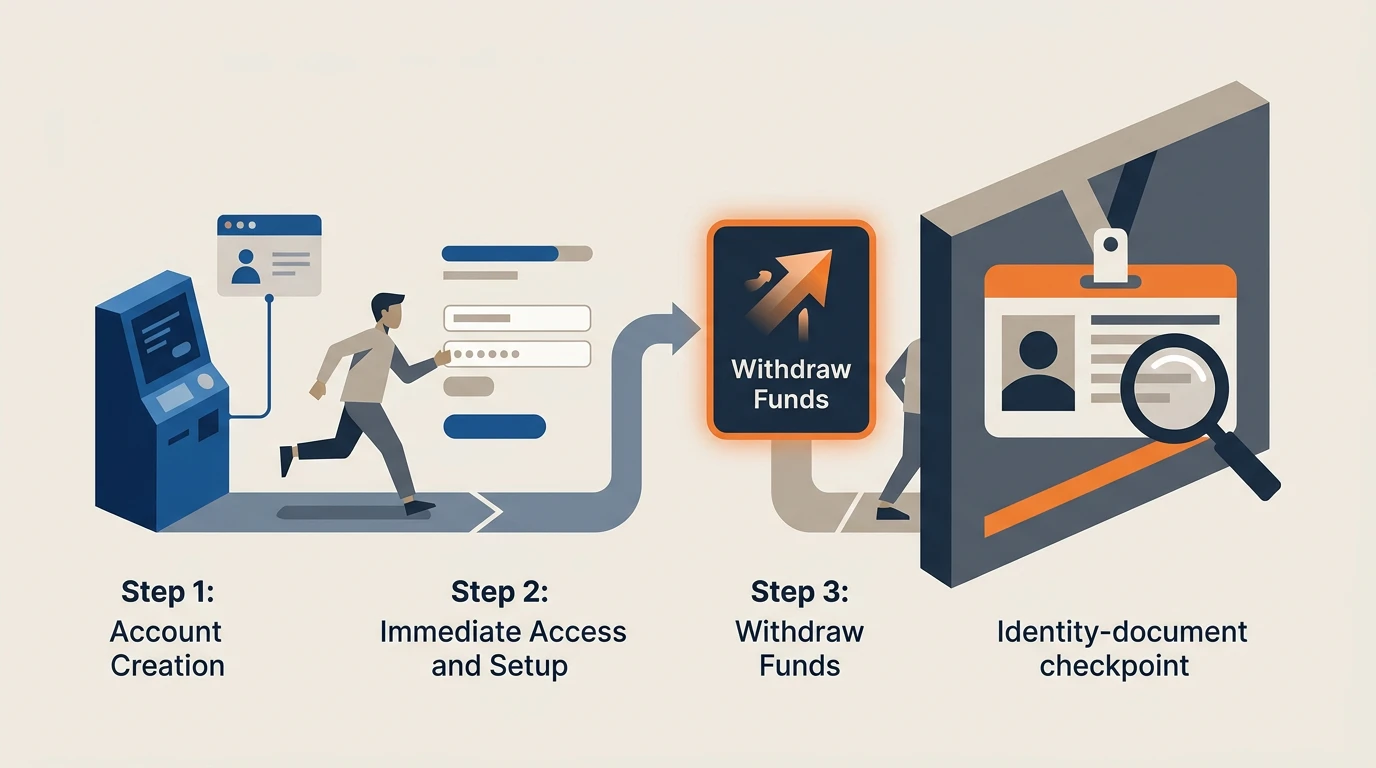
Payment behaviour is one of the clearest differences between regulated and offshore play. UKGC-licensed sites have banned credit-card deposits since April 2020 and lean on debit cards, PayPal, Apple Pay and established e-wallets. Offshore operators frequently push cryptocurrency and prepaid options instead, partly because those rails are harder to block and partly because they support faster, lighter-touch onboarding.
That lighter onboarding is the basis of the “no-KYC” sign-up that recurs across this niche. Skipping verification at registration speeds up the first deposit, but it commonly shifts the identity check to the point of withdrawal – the moment a player is most exposed, because funds can be frozen pending documents the site only now demands. The detail sits on the pages covering payment methods offshore casinos offer UK players and how no-KYC registration works.
Bonuses follow the same logic. Outside Remote Gaming Duty and the UK bonus rules taking effect in January 2026, offshore operators advertise larger deposit matches with heavier wagering requirements. The headline figure and the real value can diverge sharply once the terms are read in full, which is the focus of how offshore bonuses and wagering requirements work.


What players lose outside UKGC protection
The single most important point in this whole subject is what disappears when a player steps outside the UKGC perimeter. It is not one protection but a stack of them, removed at once. There is no fund-segregation guarantee, so deposits may be unrecoverable if the operator fails. There is no UK fair-terms requirement, so terms can be written to withhold winnings. There is no UK dispute resolution, because UK alternative-dispute-resolution bodies have no jurisdiction over offshore operators. And GamStop, by design, does not apply.
On top of those structural gaps sit recurring category-level failure patterns: winnings withheld through opaque bonus terms; delayed, capped or refused withdrawals; sudden verification demands only at cashout; and operators that lapse or misrepresent their offshore licence. The Commission is actively disrupting this market rather than tolerating it, which is the clearest sign these are not benign alternatives.
For the full, harm-aware breakdown, see what UK players lose outside UKGC protection and the related analysis of no-verification casino risks.

The legitimate route back for self-excluded players
If you self-excluded and are now looking at offshore sites, there is a legitimate path that does not involve circumventing your own decision. GamStop cannot be lifted before the period you chose ends; the registration has to run its term. After expiry, removal requires contacting GamStop, verifying your identity and waiting out a mandatory 24-hour cooling-off period before access is restored. If no action is taken after a 5-year term, an automatic extension applies.
The more protective options are worth weighing first. UKGC operators offer cooling-off and deposit or loss limits for shorter breaks. Combining GamStop with device-level blocking through Gamban covers the offshore sites GamStop cannot reach, and Gamban can be obtained free via the National Gambling Helpline. Counselling and treatment are available through the helpline and the NHS National Gambling Clinic. The full route is set out under how to remove GamStop the legitimate way.


If gambling is causing you harm
If you or someone you know is struggling, free and confidential help is available in the UK around the clock.
- National Gambling Helpline: 0808 8020 133 – free and confidential, 24 hours a day, operated by GamCare.
- GamStop – the national online self-exclusion scheme.
- BeGambleAware – harm-prevention information and treatment routes.
- GamCare – support, advice and treatment services.
Device-level blocking via Gamban covers offshore sites that GamStop cannot reach and can be obtained free through the helpline.
About the author
Eleanor Hartwell – Gambling Regulation Analyst
Eleanor Hartwell is a gambling-regulation analyst with over twelve years spent tracking UK licensing policy, player-protection schemes and the offshore operator market. Her work focuses on how self-exclusion frameworks such as GamStop interact with operators licensed outside the United Kingdom and what that means for consumer risk. She writes primarily for an informational audience seeking to understand the legal and practical realities of gambling outside the UK regulatory perimeter, and holds a professional background in financial compliance.
More about Eleanor Hartwell
Questions readers ask most
What does “casino not on GamStop” actually mean?
It refers to an online gambling site that is not connected to GamStop, the UK national online self-exclusion scheme. Because GamStop only queries operators licensed by the UK Gambling Commission, sites licensed solely offshore sit outside the scheme and cannot be reached by it.
Are casinos not on GamStop legal for UK players?
No UK statute criminalises an individual for betting with an offshore operator. The Gambling Act 2005 targets operators and advertisers, not players. Playing offshore is not a criminal act for the user, but it removes every UK consumer protection at once.
Can GamStop block offshore casinos?
No. GamStop is designed to work only with UKGC-licensed operators that are obliged to query its database. It has no jurisdiction over sites licensed elsewhere, so it cannot block them. Device-level blocking such as Gamban is needed to cover those sites.
Are winnings from non-GamStop casinos taxable in the UK?
Gambling winnings are tax-free for players in the UK regardless of where the operator is based. The tax burden falls on operators through Remote Gaming Duty, which rises to 40 percent from 1 April 2026.
What protections do players lose at offshore sites?
Players lose fund-segregation guarantees, UK fair-terms rules, access to UK dispute resolution and the reach of GamStop. Responsible-gambling tools tend to be weaker and voluntary, and verification may only be demanded at the cashout stage.
Where can I get support if I am self-excluded?
The National Gambling Helpline on 0808 8020 133 is free and confidential, 24 hours a day. GamStop, BeGambleAware and GamCare provide further support, and device-level blocking via Gamban can be obtained free through the helpline.
Prepared by the Casino not on Gamstop editorial staff.